
Eaman Jahani Directory Page
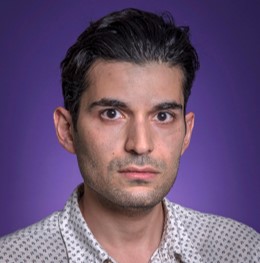
Eaman Jahani
Assistant Professor
Contact
Eaman Jahani, arriving in January 2024 as an assistant professor for the DOIT from the UC Berkeley Department of Statistics, describes his research interest as “understanding how social networks and online platforms affect a wide range of outcomes and how they can lead to unequal distribution of resources, using tools from network science and causal inference". He holds a PhD in Social and Engineering Systems with a secondary degree in Statistics from MIT.
News
Academic Publications
Prompt Adaptation as a Dynamic Complement in Generative AI Systems
As generative AI systems rapidly improve, a key question emerges: How do users keep up—and what happens if they fail to do so. Drawing on theories of dynamic capabilities and IT complements, we examine prompt adaptation—the adjustments users make to their inputs in response to evolving model behavior—as a mechanism that helps determine whether technical advances translate into realized economic value. In a preregistered online experiment with 1,893 participants, who submitted over 18,000 prompts and generated more than 300,000 images, users attempted to replicate a target image in 10 tries using one of three randomly assigned models: DALL-E 2, DALL-E 3, or DALL-E 3 with automated prompt rewriting. We find that users
with access to DALL-E 3 achieved higher image similarity than those with DALL-E 2—but only about half of this gain (51%) came from the model itself. The other half (49%) resulted from users adapting their prompts in response to the model’s capabilities. This adaptation emerged across the skill distribution, was driven by trial-and-error, and could not be replicated by automated prompt rewriting, which erased 58% of the performance improvement associated with DALL-E 3. Our findings position prompt adaptation as a dynamic complement to generative AI—and suggest that without it, a substantial share of the economic value created when models advance may go unrealized.
Eaman Jahani, UMD
Benjamin Manning, MIT
Hong-Yi TuYe, MIT
Mohammed Alsobay, MIT
Christos Nicolaides, University of Cyprus
Siddharth Suri, Microsoft Research
David Holtz, Columbia